



Overview
Recommending the right products is at the core of Jolimoi's social-selling model. Yet for many Stylists, especially new ones, finding a product was only part of the challenge.
They also needed to understand what to recommend with it, in what order, and how to turn individual products into a coherent routine for their client.
As Product Designer, I worked closely with the Product Manager and collaborated with Engineering, Data and E-shop throughout the project. I owned the end-to-end design, from interaction flows and edge cases to UI and delivery.
The Product Manager defined the initial recommendation logic, while the E-shop provided the routine content. My role was to turn those business rules into an experience that worked in real selling situations: deciding where recommendations should appear, how routines and alternatives should work, and how Stylists could move from recommendation to basket with minimal friction.
The problem
Through NPS feedback and discussions with Stylists, several recurring pain points emerged: difficulty navigating the catalog, limited confidence in product knowledge, and uncertainty around how to build a complete routine for a client.
"I don't know what to recommend."
Even after finding a relevant product, the next step wasn't obvious. Stylists still had to determine what should come before or after it, and how individual products could work together.
The issue wasn't access to products. It was the gap between finding a product and confidently recommending a complete routine.
Reframing the Problem
Instead of helping Stylists simply know more products, we focused on helping them understand what to recommend next.
A product could become the entry point into a complete routine rather than the end of the browsing journey.
Guide the decision without taking it away.
Designing the Experience
01 — Start where Stylists already are
From product discovery to routine building
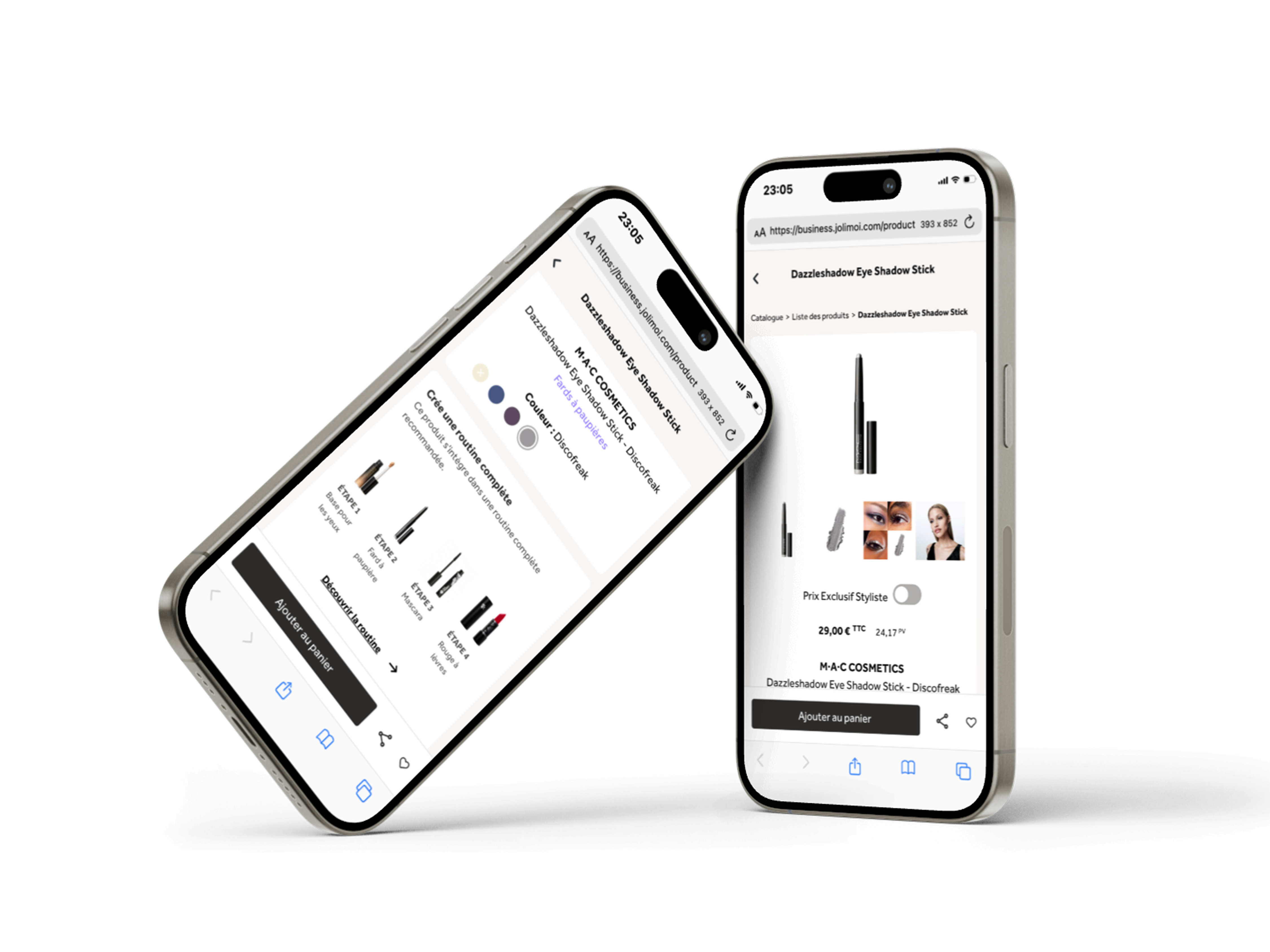
Rather than introducing a separate recommendation tool, I embedded the experience directly into the product page.
When viewing a product, Stylists can immediately see that it belongs to a broader routine and preview the different steps.
This creates a natural transition without asking them to leave their existing browsing flow:
Product → Routine → Recommendation
Routine preview on product page
02 — Turn product expertise into a clear structure
Make the recommendation understandable
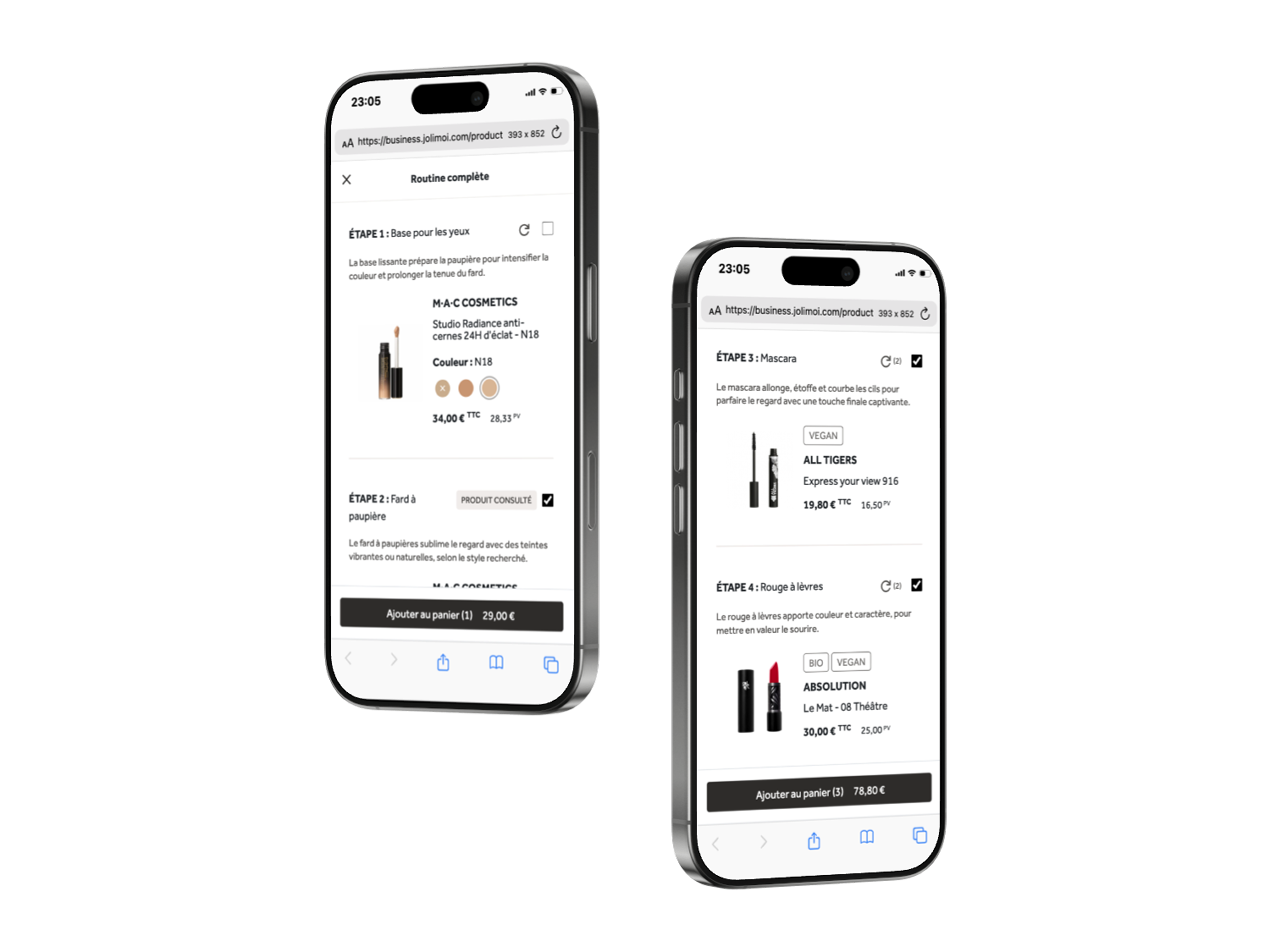
A complete routine can quickly become overwhelming, so I structured it as a sequence of clear steps.
Each step explains its role in the routine and presents one primary recommendation, with alternatives when relevant.
Instead of presenting Stylists with another list of products to evaluate, the interface answers three simple questions:
What do I need?
Why is it part of the routine?
What can I choose instead?
Why is it part of the routine?
What can I choose instead?
This transformed the underlying recommendation logic into something Stylists could understand and use during a client interaction.
Full routine view
03 — Keep the Stylist in control
Guidance, not automation
The goal was not to automatically decide what a Stylist should sell.
Recommendations provide a starting point, while the interface lets Stylists adjust the routine by choosing between relevant products.
As selections change, the total updates accordingly. Once satisfied, the Stylist can add the complete routine to the basket in one action.
This reduces the friction between:
understanding → choosing → recommending → acting.
Designing for real usage
The experience also needed to work across different selling contexts.
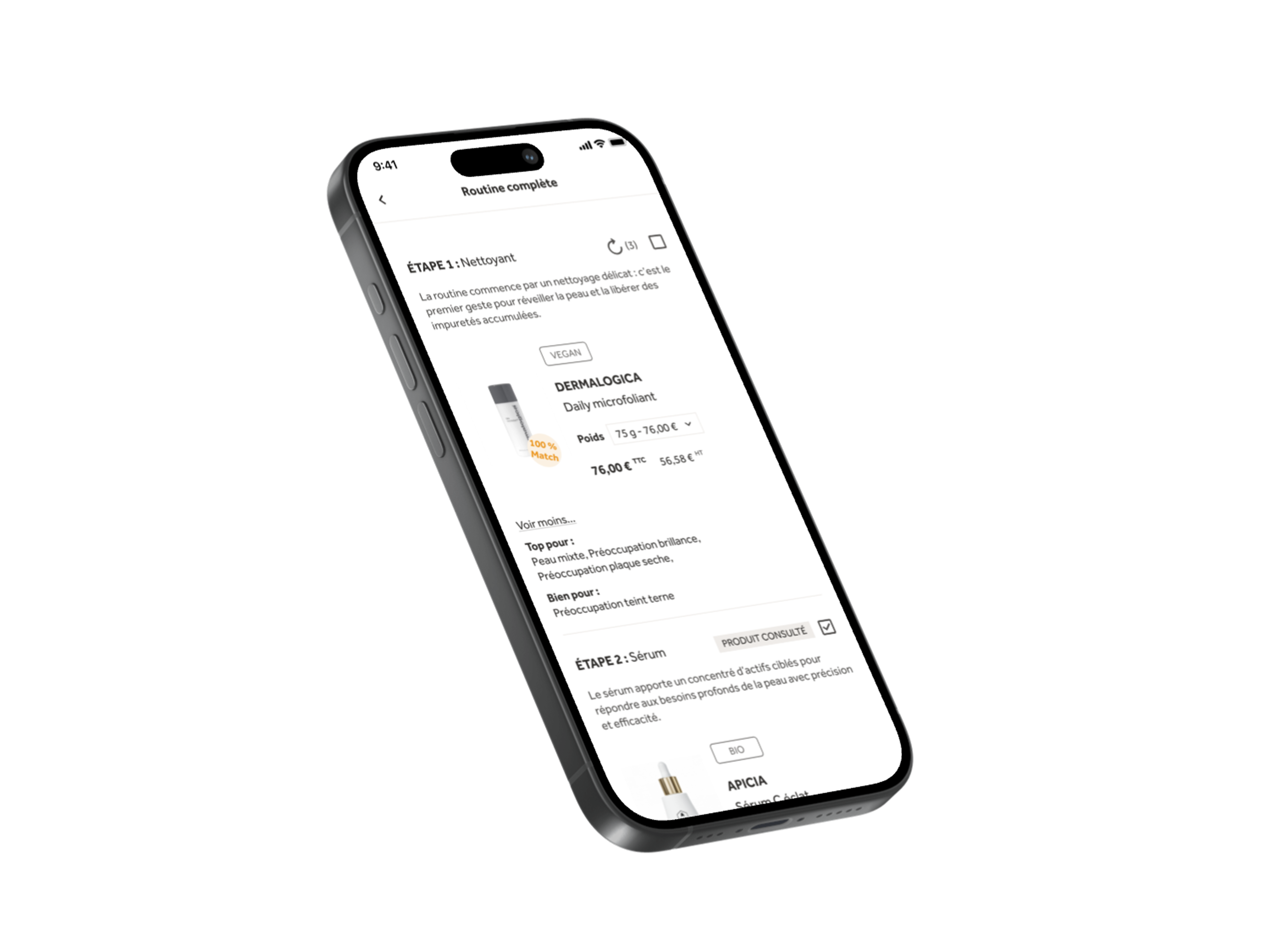
When a client has completed Jolimoi's diagnostic, existing product match scores can be used to make the routine more relevant to their profile. When no diagnostic data is available, Stylists can still access a structured recommendation based on product and category logic.
Personalization enhances the experience, but never becomes a prerequisite for using it.
Personalized routine
Outcome
The feature created a direct path from individual product discovery to building and adding a complete routine to the basket.
It also established a reusable recommendation pattern within the Business App:
product discovery → guided routine → product selection → basket.
By embedding recommendation into the existing browsing experience, we avoided introducing another standalone tool for Stylists to learn.
Next steps
The next step would be to make recommendations more adaptive to both the client and the Stylist.
- Client context: Go beyond diagnostic data by incorporating purchase history and preferences to make routines more relevant over time.
- Stylist experience: Give newer Stylists more guidance while allowing experienced Stylists to move faster.
The challenge wasn't to expose more recommendations. It was to make product expertise usable at the moment Stylists needed it.